Protect Your Pavers Before They Fade Further
Paver Brick Sealing in Las Vegas for driveways and patios losing color and stability under desert sun
Diamond Shield Coatings, LLC provides professional cleaning and sealing services for paver driveways, patios, and walkways that have started to fade, lose joint sand, or show early signs of staining and weed intrusion. You installed pavers because they add curb appeal and function, but without sealing, the intense sun exposure and temperature swings common in Las Vegas and surrounding areas will continue to degrade the surface. This service restores the original color, stabilizes the joints, and creates a barrier that protects against oil stains, UV damage, and moisture penetration.
The process begins with a thorough cleaning to remove embedded dirt, efflorescence, and organic growth that has built up in the joints and on the surface. Once the pavers are clean and dry, a penetrating sealer is applied that soaks into the pores of the brick and locks in the color while forming a protective layer on top. The sealer also hardens the joint sand, which reduces shifting and prevents weeds from taking root between the pavers. In Southern Nevada, where UV exposure is constant and temperatures can exceed 110 degrees, the sealer must be formulated to resist thermal breakdown and maintain adhesion under thermal expansion and contraction.
If your pavers look washed out or the joints are starting to separate, contact Diamond Shield Coatings, LLC to schedule a cleaning and sealing that will extend the life of your hardscape.
What Your Pavers Look Like After Sealing
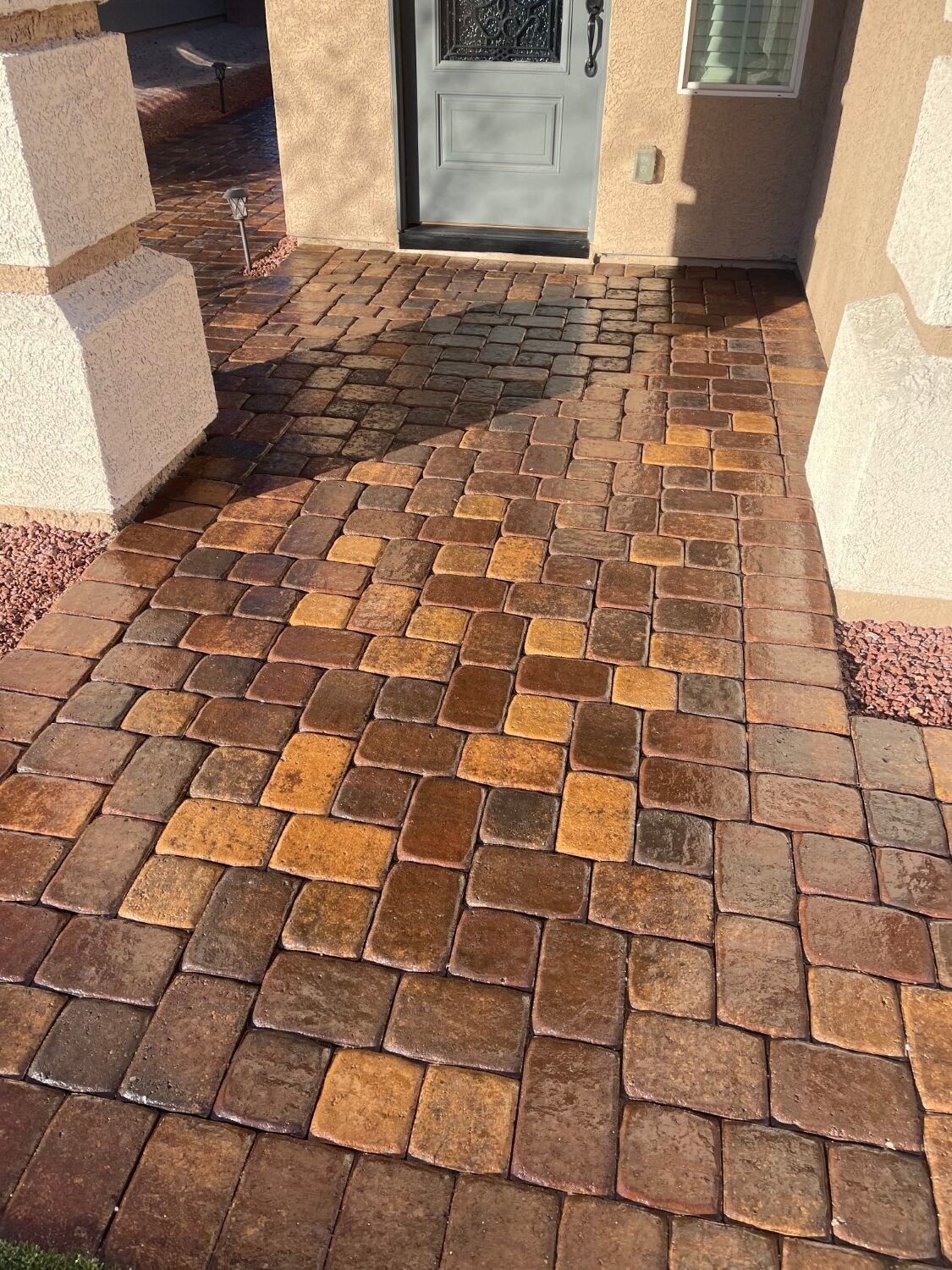
The color will return to a richer, more saturated tone that resembles how the pavers looked when they were first installed. The sealer brings out the natural hues in the brick without creating an artificial gloss, though you can choose between a matte, satin, or wet-look finish depending on your preference. The joints will feel firm underfoot, and you will notice fewer weeds and less sand displacement after rain or wind events.
Once cured, the sealed surface resists oil stains from vehicles, reduces water absorption that can lead to efflorescence, and makes routine cleaning easier because dirt and debris sit on top of the sealer instead of soaking into the paver surface. Diamond Shield Coatings, LLC applies the sealer in thin, even coats using a sprayer or roller, depending on the texture of the pavers and the layout of the area. The sealer typically cures within 24 to 48 hours, but foot traffic should be limited during the first 24 hours, and vehicles should stay off the surface for at least 48 hours to allow full adhesion.
The pavers need to be completely dry before sealing, which can be challenging during cooler months when morning dew lingers. Sealing is most effective when performed during dry, mild weather, and the sealer will need to be reapplied every two to three years depending on sun exposure and traffic levels. The service does not repair cracked or severely settled pavers, and any structural issues should be addressed before sealing to avoid trapping moisture or covering underlying problems.
What to Expect During Paver Sealing
Most questions about paver sealing come up when homeowners notice the color has faded or the joints are starting to fail and want to know if sealing will solve the problem.
What causes pavers to fade so quickly in Las Vegas?
The intense UV exposure breaks down the pigments in the brick and oxidizes the surface, which lightens the color and makes the pavers look washed out over time.
How does sealing prevent weeds from growing between the pavers?
The sealer penetrates and hardens the joint sand, creating a more solid barrier that makes it difficult for seeds to germinate and roots to establish.
Why does the surface need to be cleaned before sealing?
Any dirt, oil, or organic material left on the surface will prevent the sealer from bonding properly and can trap contaminants under the coating, leading to discoloration or adhesion failure.
Can sealing stop oil stains from a parked car?
The sealer creates a barrier that resists oil penetration, so most stains can be cleaned off the surface before they soak in, though heavy or prolonged exposure may still leave a mark.
How long does the sealer last under full sun exposure?
Most high-quality sealers hold up for two to three years in direct sun before the UV protection begins to degrade and the color starts to fade again, at which point reapplication is recommended.
If your pavers are losing color or the joints are becoming unstable, reach out to discuss cleaning and sealing options that will restore the appearance and extend the life of your driveway or patio.